
Love?
by Tiffany SmithThis love is about control.
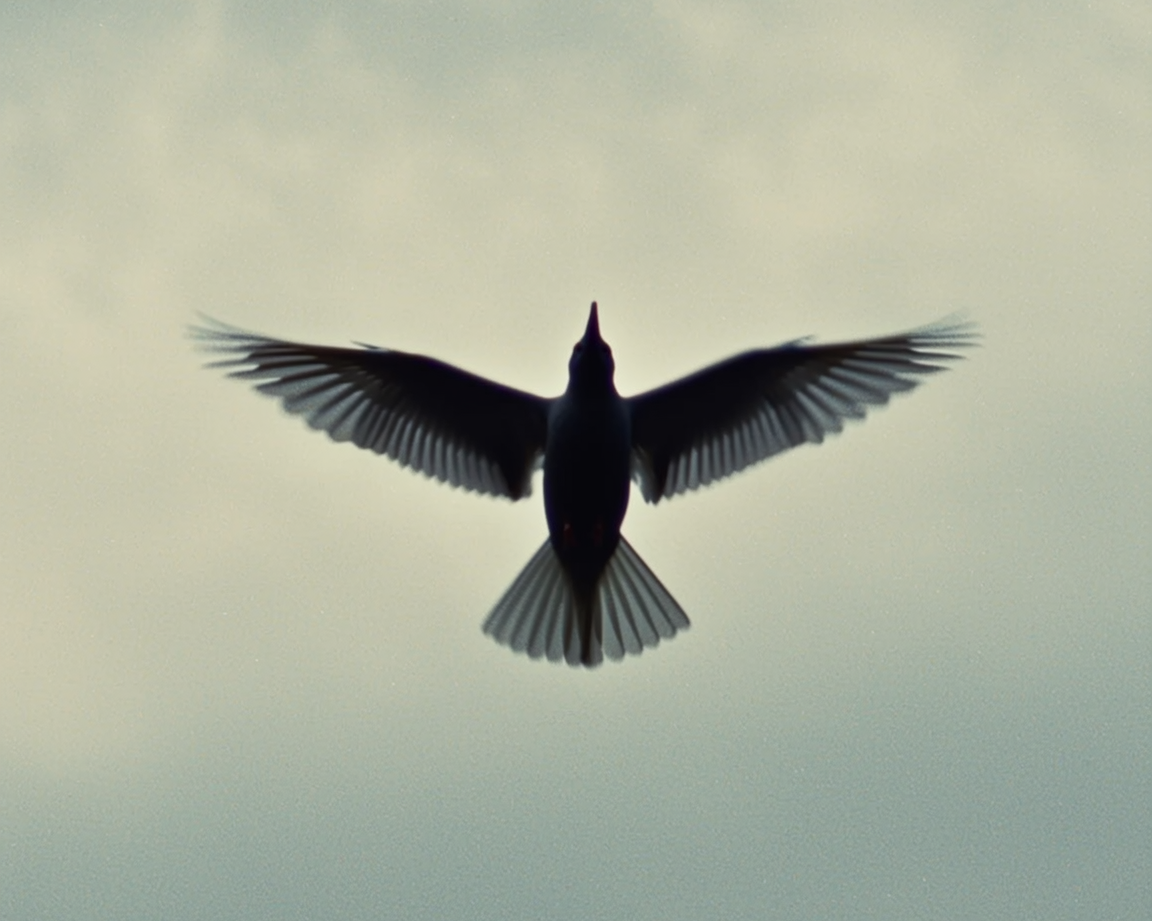
Love as Use
“If you love someone, set them free.”
February, the month of love, arrives heavy with instruction. Emotions are heightened. Expectations are implicit. The fear of doing it wrong poisons every purchase, every dinner reservation, every gesture meant to signal devotion. And yet love is sold to us as effortless, natural, intuitive, something that simply happens when two people share a special, almost psychic bond. With all this vigilance, all this performance, all this care placed into actions and objects, we rarely stop to ask whether any of it resembles love at all.We assume that to love means to care for someone and that care must be demonstrated. We prove love by meeting needs, by touching, by claiming. We use possessive language (be mine). Romance is expected to culminate in sex; sex is framed as love’s highest expression. A body becomes a site of access, validation, and gratification. The loved one is consumed, absorbed, and repurposed as a signal of our own desirability, stability, and worth. To love something, in this framework, is to ingest it; to integrate it into ourselves and excrete it as an enhancement to our lives.Care becomes a justification for control. We shape the behaviour of the loved one “for their own good,” so they function properly, so they don’t embarrass us, whether we be the parent, the partner, the owner. But when it comes to our own needs, we expect the inverse: unconditional acceptance, frictionless communication, effortless emotional attunement, all without requiring corresponding labor from ourselves. We want to be understood without explaining, supported without inconvenience. Even intimacy is reduced to sortable traits (love languages, attachment styles) so another person’s inner life can be efficiently categorized and optimized for our benefit.These ideas don’t emerge organically. Societies have always engineered behaviour, and romantic narratives are among the most effective tools because they feel personal rather than imposed. Love becomes a covert discipline, a self-policing system that scales from the private to the cultural. We learn how to desire, how to attach, how to endure, and what to tolerate, all under the guise of romance.So the question becomes:If love requires access and demands compliance, is it really love at all?The Myth of Gentle Possession
Those of us who claim to love nature often imagine escape as intimacy. A cabin in the woods. A return to something simpler. What this fantasy quietly erases is the destruction required to stage it: trees cleared, land levelled, roads cut into ecosystems that were functioning perfectly well without us. If we truly loved wilderness, why is our first instinct to insert ourselves into it? Why does love so often arrive with a deed, a boundary, a footprint?We assume the land is ours because it exists. We rarely account for the lives already living on it.Bonsai offers a smaller, cleaner metaphor. A tree is carefully mutilated so it conforms to a human vision of beauty. We call this reverence. We feel no guilt because the tree does not scream. But would a tree not be more beautiful if it were allowed to grow as it is? Why are we so certain that human intervention improves what is already alive? Where does care end and ego begin?This logic repeats everywhere. Parents trim away their children’s “bad” traits for love. Dreams are discouraged out of love. Bodies are reshaped for love. A nose altered, a feature corrected, all under the banner of self-improvement without interrogating who decided the original form was wrong.Nowhere is this confusion clearer than in our relationships with animals. We force-breed pets to exaggerate traits we find appealing: shortened snouts, elongated spines, flattened faces, distorted proportions. We call these outcomes devotion. French bulldogs, designer cats, racehorses pushed past their limits. All evidence of love, we are told. But how do these practices serve the animals themselves?The story of The Velveteen Rabbit celebrates being loved into ruin as the highest virtue. For objects, this metaphor works. Toys are meant to be played with. Clothes are meant to be worn. Use implies wear. The horror begins when we extend this logic to living beings, to bodies with nerves, instincts, and inner lives of their own. We mistake being shaped by love for being devoured by it, and we call the damage proof of sincerity.A living being is not meant to be consumed. Love does not require sacrifice; it requires acceptance. Technology as the Great Amplifier
“If they come back, they’re yours…”
Technology did not invent possessive love. It amplified it.Platforms reward what can be seen, shared, and reacted to. They do not reward restraint. They do not reward non-interference. They reward capture, performance, and control. Under these conditions, love becomes something that must be documented to be believed.If it mattered, it must have left evidence.Animals go viral not because they are thriving, but because they are accessible. Wildlife content favors proximity over autonomy: the hand-fed tiger, the compliant wolf, the “special bond” framed as proof of care. What remains invisible is the cost of that access: the conditioning, the confinement, the quiet erosion of an animal’s life into content.The same logic governs aesthetics of care. Environmental concern becomes a look. Ethics become branding. A green label, a pastoral image, a curated softness that allows consumption to continue under a different name. The platform rewards the appearance of love, not its consequences.Ownership itself becomes aspirational. Collections, pets, properties, partners, all become legible signs of a life being successfully lived. Love is no longer something practiced; it is something displayed. The more visible it is, the more legitimate it feels.Technology trains us to confuse interaction with intimacy. To equate access with affection. To believe that what is seen, touched, and shared is more real than what is left alone.Love Without Audience
What we often call love is simply interaction optimized for reward.Real love doesn’t go viral. It doesn’t scale. It doesn’t announce itself. True love (here understood as non-interference) makes for poor content. There is no spectacle in it, no payoff. It lives in small, private choices: picking through a pallet of bananas to find the ones still green because your loved one prefers to let them ripen at home.Autonomy doesn’t perform. A being fully possessed of their own life offers no easy feedback loop. Allowing someone to live on their own terms does nothing for your dopamine levels. You won’t get a reaction. You won’t get proof. You won’t get the satisfaction of being needed, mirrored, or obeyed.Can our egos withstand being a side character in someone else’s life?True love doesn’t feed the algorithm. Love as non-interference generates no content and looks, from the outside, like nothing is happening. It is the undocumented kindness: helping an elderly woman manoeuvre a Costco stocking cart even though you don’t work there, offering a compliment that will never be traced back to you, letting your dog nap without touching them, allowing a beloved’s irritating quirks to remain intact.Love is allowing something to live according to its own nature. We sometimes grant this grace to ourselves, occasionally to other people, and far more rarely to animals, wilderness, or the planet itself.Nothing is taken. Nothing is shaped. Nothing is displayed.And yet, something is finally left alone.Love Without Possession
…if they don’t they never were.” - Richard BachLetting a flower grow in a forest. Letting a tree grow without pruning it into obedience. Leaving the tiger in the jungle. Allowing a river to follow its own course. Letting a piece of land exist without inserting a cabin into it to fulfil a private fantasy. Letting someone walk away, even to love someone else, without rewriting the story so that it still centres you.True love does not entitle us to another’s body, labor, presence, attention, or memory. It does not require permanence to be real. A love that ends is not a failed love. A life that leaves us is not a betrayal. Not every relationship is meant to stretch indefinitely, and forcing arbitrary timelines and milestones onto human connection often does more harm than honesty ever could.Desire does not equal ownership. Attraction is not a claim. Wanting something does not grant us the right to touch it, shape it, keep it, or extract meaning from it. Desire can exist without resolution. Love can exist without outcome. Sometimes love does its best work when it is left exactly where it is.What unsettles us most is that love does not need to be acknowledged to be valid. It does not require proof, performance, or incorporation into identity. Loving something does not give us license to display it, consume it, or fold it into our sense of self. If you love something, you don’t have to stick your fingers into its existence.The Questions
What would non-extractive love look like?How much of ourselves do we project onto the things we love?What would remain of love if possession was removed from it?
The opposite of love is not hate or indifference. It’s use.