
The Snow Was Borrowed
Milano Cortina 2026 gave us sixteen days of extraordinary sport. It also gave us a question the Olympic movement can no longer defer.
by Jaclyn Michele 
The closing ceremony was held at the Verona Arena on the 22nd of February. They called it Beauty in Action, and in the warmth of that ancient amphitheatre, with the Olympic flame burning for the last time and the Alps somewhere beyond the darkness, it was easy to believe in it. Sixteen days. Sixteen disciplines. Close to 2,900 athletes from 93 countries. A Games that delivered, by almost any sporting measure, an edition worth the wait.And yet, outside, the mountains told a different story.
The Sport, First. Because It Deserves It
Let us not shortchange what happened on the snow and ice of northern Italy. Milano Cortina 2026 was, by the measure of competition alone, one of the great Winter Games.Johannes Høsflot Klæbo did something nobody in the history of the Winter Olympics had ever done. The Norwegian cross-country skier arrived in Italy having won five gold medals at previous Games. He left having won six here, becoming the first athlete in any winter sport to claim six gold medals at a single Olympic Games and with eleven career golds across three Olympics, he is now the greatest Winter Olympian the sport has produced. His final victory, the men's 50km mass start, was less a race than a procession: a two-time world champion crossing a line that history was already drawing for him 17.5 seconds before the next man arrived.The United States found its own coronation moment on the final night. In a men's ice hockey final for the ages, the first time NHL players had competed at the Olympics since 2014 — Team USA defeated Canada 2-1 in overtime to claim their first men's gold since the Miracle on Ice at Lake Placid in 1980. It was Jack Hughes who broke the deadlock, his overtime goal silencing the Canadian fans and writing himself into a lineage of American hockey mythology that stretches back nearly half a century. Earlier that same day, the women's tournament had delivered its own overtime drama: the United States had beaten Canada in the gold medal match too, with Hilary Knight in her final game in a USA jersey, scoring the equalizer with two minutes remaining before the Americans completed the win in sudden death. Knight, in the process, broke the record for most Olympic goals and points for the US women's hockey team. A passing of the torch, yes. But first, one last miracle from the woman who had earned the right to deliver it.Elsewhere: Mikaela Shiffrin won her second Olympic slalom gold, twelve years apart, confirming what the numbers had already proven — that she is the greatest alpine skier in the history of the sport, full stop. Eileen Gu finished her Olympic career as the most decorated freeskier in Olympic history, adding a halfpipe gold and two further medals to a legacy that began in Beijing. American speed skater Jordan Stolz, just 21 years old, became the first male athlete since 1980 to win both the 500m and 1000m at the same Games. And Alysa Liu became the first American woman in 24 years to win Olympic gold in figure skating, her performance at the Mediolanum Forum in Milan a reminder that some sports are less competitions than they are arguments for the existence of grace.Ski mountaineering made its debut as an Olympic discipline, with Spain's Oriol Cardona Coll and Switzerland's Marianne Fatton writing their names into history as the sport's first Olympic champions. It was a fitting addition to a Games already defined by movement across the landscape — athletes ascending and descending the same mountains that, quietly, were being asked to bear more than they were built to carry.
The Mountains Were Already Warmer
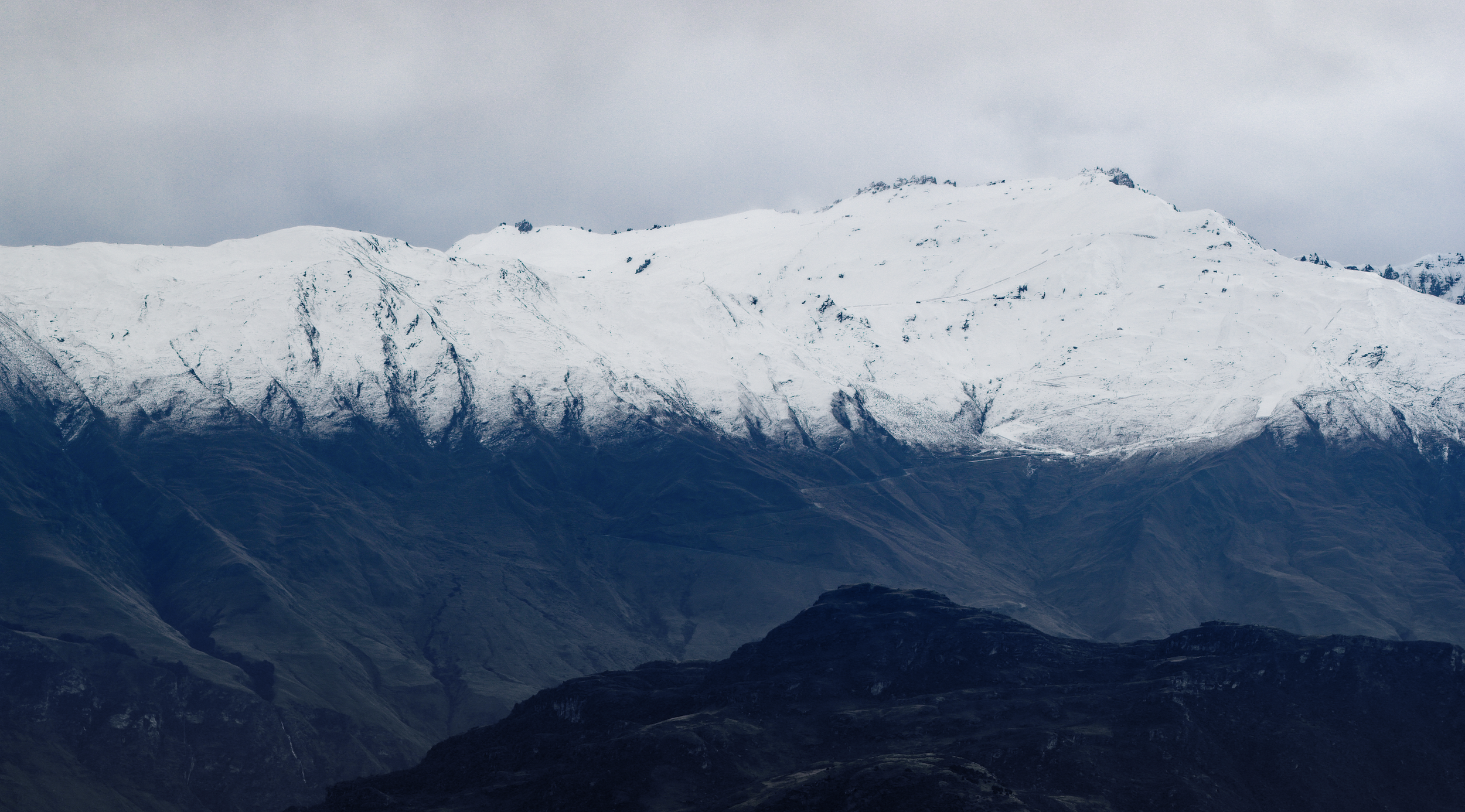
Cortina d'Ampezzo last hosted the Winter Olympics in 1956. In the decade that followed those Games, the town averaged 214 days per year when temperatures dropped below freezing. In the decade between 2016 and 2025, that number had fallen substantially. February temperatures in Cortina have risen measurably since the mid-twentieth century. In Milan, which hosted the indoor ice events, February temperatures warmed by nearly six degrees Fahrenheit over the same period.These are not abstractions. They are the conditions under which an Olympic Games now has to be built.To ensure competition-quality snow across the outdoor venues, organisers required more than three million cubic yards of artificial snow. To produce it, four new high-altitude reservoirs were constructed. Rivers including the Spöl and the Boite, were drawn upon in volumes that environmental groups described as drought-stressing already-depleted waterways. And in Cortina, to make space for the new sliding centre that would host bobsleigh, skeleton, and luge, hundreds of ancient larch trees were felled. Trees that, as one local environmental activist put it, had survived two world wars."The Games must be Italian games," Italy's deputy prime minister Matteo Salvini declared in 2024, when the IOC had proposed using an existing world-class track in Innsbruck to avoid the need for new construction in Cortina. He accused environmentalists of attempting to sabotage the Olympics. The trees came down. The bobsled track was built. The Games were Italian.
The World Wildlife Fund Italia and local environmental groups withdrew from the organizing committee's consultation process before the Games began, stating that the sustainability framework had become, in their assessment, rhetoric rather than constraint.What the Numbers Say and What They Don’t
The organising committee's sustainability credentials, in isolation, are not without substance. Approximately 85 percent of competition venues were existing facilities, which was one of the highest reuse rates in Winter Olympic history. The Athletes' Village in Milan was designed from the outset to be converted into student housing and residential accommodation after the Games, addressing real demand in a city home to Bocconi University and the Politecnico. Snowmaking systems were upgraded to automated, GPS-monitored technology that organisers claim reduced electricity consumption by around 30 percent compared to conventional methods. Food waste recovery targets were set. Twenty-four thousand items were reused from Paris 2024. The goal, on paper, was to recycle 70 percent of urban waste across venues.These are genuine efforts and they should be acknowledged as such.But the official emissions totals do not include the carbon footprint of the Games' major sponsors — including energy companies whose involvement, when factored in, adds an estimated 1.3 million tonnes of CO2 equivalent to the overall figure, according to independent analysis. That is approximately 40 percent more than the official total. Spectator travel — aviation, primarily — accounts for hundreds of thousands of additional tonnes. The net glacial impact of hosting a Winter Games, across infrastructure construction, snowmaking, and the atmospheric warming generated by the event's total emissions, has been estimated at the loss of more than 14 million tonnes of glacier ice. Glacier ice that will not return.The IOC has committed that from 2030 onwards, host cities will be contractually obligated to minimise direct and indirect greenhouse gas emissions, protect biodiversity, and manage resources sustainably. The commitment is meaningful. The timeline reveals everything about the pace of institutional change. The mountains of Cortina d'Ampezzo are warming now. The larch trees fell before the opening ceremony.
What Sport Can Do Better. And Why It Matters That It Tries
The critique of the Winter Olympics' environmental record is not an argument against sport. It is an argument for taking sport seriously enough to demand that it meet the values it publicly espouses. The Olympic movement has always claimed to be more than competition — a vehicle for human flourishing, a demonstration of what people can achieve when they act with intention. If that claim is genuine, the environmental reckoning it requires is not a burden. It is the natural extension of the philosophy.

There are concrete, achievable changes that the IOC, host cities, and international sporting federations could implement. They are not radical. They are, in most cases, simply the application of standards that already exist in other sectors to the specific context of major sporting events.

The rotation of Winter Games between a small, permanent group of climate-reliable host regions rather than the current model of competitive bidding that drives infrastructure overbuilding, would fundamentally change the economics and ecology of the event. Several IOC members have already proposed this. The resistance comes from the political and commercial value of national hosting rights. That resistance is understandable. It is also, in the context of what is at stake, insufficient justification for continuing.
The exclusion of sponsor emissions from official carbon accounting is a disclosure problem before it is anything else. The solution is not complicated: require full lifecycle emissions reporting, including supply chain and sponsorship partners, as a condition of official partnership. Several major corporations already publish this data voluntarily. The IOC requiring it would not impose a new burden. It would simply make the existing burden visible.The snowmaking question deserves more than technological incrementalism. Efficiency improvements in artificial snow production are real and valuable. But they are being applied to an infrastructure that exists because natural snow can no longer be relied upon — and the emissions that accumulate from that infrastructure contribute to the warming that makes natural snow less reliable in the first place. The honest conversation is not about how to make snow more efficiently. It is about which events, at which altitudes, remain viable as host venues in a warming world — and what happens to the communities built around winter tourism when the answer changes.
The Athletes' Village model piloted in Milan — residential conversion from day one of the design process — should become a non-negotiable standard rather than an exception worth celebrating. The Olympic Games have left behind ghost infrastructure on five continents. The political will to prevent it exists, when it is actually required rather than merely encouraged.Plant-based and low-carbon catering across all Olympic venues is achievable at scale and has been demonstrated at major events already. A full lifecycle emissions assessment of catering, including the carbon cost of animal agriculture is absent from the current Olympic sustainability framework. Its inclusion would not require athletes to change how they eat. It would require organizers to understand what they are serving.The View from Verona
The closing ceremony at the Verona Arena ended, as all Olympic closing ceremonies do, with the handover to the next host. The French Alps will welcome the Winter Games in 2030 — a distributed model across the French Riviera and the mountains, another iteration of the attempt to spread the Games' footprint more lightly across the landscape.Whether it succeeds will depend less on the organizing committee's press releases than on what the IOC and the global community of winter sport choose to require of themselves before the first athlete arrives. The commitment to climate-positive Games from 2030 is the right direction. The gap between that commitment and what happened in the forests of Cortina is the distance that remains to be covered.The sport was extraordinary. Klæbo's sixth gold, Hughes' overtime winner, Shiffrin's slalom, Liu's skates on the ice of Milan. These moments happened, and they were real, and they mattered in the way that only live sport can matter — in the body, in the breath held and released, in the particular silence before a score is announced.
The snow that made them possible was borrowed. From the rivers. From the forests. From the atmosphere. At some point, borrowed snow has to be repaid. The question the Winter Olympics now carries into every edition is whether the repayment plan will be in place before the debt comes due.Lost & Vegan covers food, travel, design, and culture through the lens of intentional, plant-forward living. This article reflects our belief that the places and events we celebrate have a responsibility to the landscapes that make them possible.